How Stress Kills Your Sexual Connection

The Brutal Truth: Stress Is Your Sex Life's Biggest Enemy

Let's be real: when stress has its hooks in you, the last thing you want is to get naked with your partner. Your body isn't cooperating. Your mind is racing. And somewhere between the mortgage anxiety and the work deadline, your desire has completely vanished.
This isn't weakness. This isn't a relationship failure. This is neurobiology—and it's absolutely destroying millions of couples' intimate lives right now.
The stress and sexual connection between partners is one of the most overlooked dynamics in modern relationships. We talk about communication problems, commitment issues, and compatibility—but we rarely discuss how cortisol, the stress hormone, is literally blocking your ability to feel aroused, connected, and present with the person you love most.
The good news? Understanding this connection is the first step to fixing it. And yes, you can fix it.
How Stress Physically Hijacks Your Sexual Desire
When you're stressed, your body activates the sympathetic nervous system—the "fight or flight" response. This is ancient survival programming. Your brain perceives a threat (even if it's just a deadline), and it redirects all your resources to survival mode.
Here's what happens in your body:
-
Blood flow shifts: Blood moves away from your genitals and toward your muscles and brain. Erections become harder to achieve. Vaginal lubrication decreases. Your body literally cannot perform.
-
Cortisol spikes: This stress hormone suppresses testosterone and estrogen production—the very chemicals that fuel desire. You're not just distracted; you're biochemically turned off.
-
Your nervous system stays activated: Even when you try to have sex, your body remains in fight-or-flight mode. You can't relax. You can't surrender. You can't feel.
-
Dopamine crashes: Stress depletes the neurotransmitter responsible for pleasure and reward. Sex feels like another obligation, not a connection.
This isn't about attraction. This isn't about your partner. This is your nervous system betraying you at the exact moment you need it most.
The Emotional Disconnect That Follows Physical Shutdown

Here's where it gets darker: when sex stops happening, resentment builds. One partner feels rejected. The other feels pressured. The bedroom becomes a battleground instead of a sanctuary.
Stress doesn't just kill your sex drive—it kills your ability to be vulnerable. Intimacy requires surrender, and stress demands control. You can't do both simultaneously.
You start avoiding your partner. You sleep on opposite sides of the bed. You stop touching casually. And before you know it, you've created an emotional distance that mirrors the physical one. The stress that started as external (work, money, family) has now invaded your most sacred space.
This is where many couples make a critical mistake: they assume the problem is the relationship itself. They don't realize they're fighting against their own nervous systems.
The Stress-Intimacy Cycle: How It Gets Worse
Stress kills sex. Lack of sex increases stress. It's a vicious cycle.
Sexual connection is one of the most powerful stress-relief mechanisms available to humans. Orgasms release oxytocin (the bonding hormone), reduce cortisol, and create genuine emotional intimacy. When you remove sex from your relationship due to stress, you remove one of your primary tools for managing that stress.
So you end up more stressed. Your partner feels more rejected. The intimacy gap widens. And suddenly, you're not just dealing with the original stressor—you're dealing with a fractured relationship on top of it.
Many couples don't realize they can break this cycle. They think they need to eliminate all stress before sex can resume. But that's backwards. Strategic, intentional intimacy during stressful periods is what saves relationships.
Why Traditional Advice Fails (And What Actually Works)

Most relationship advice tells you to "communicate more" or "schedule date nights." While those aren't bad, they miss the nervous system reality.
You can't talk your way out of a nervous system that's stuck in survival mode. You can't schedule your way to desire when your body is flooded with cortisol.
What actually works:
-
Nervous system regulation first: Before sex, you need to get your body out of fight-or-flight. This means breathwork, movement, or meditation—not more talking about feelings.
-
Non-sexual touch: Massage, cuddling, and physical affection without the pressure of performance can help your nervous system recognize safety. This often naturally leads to desire.
-
Micro-intimacy moments: You don't need hour-long sex sessions. Even 10 minutes of genuine connection—kissing, touching, being present—can rebuild the bond and remind your body what pleasure feels like.
-
Explicit permission to be imperfect: Stressed sex might be shorter, less intense, or require more foreplay. That's okay. The goal isn't Olympic-level performance; it's reconnection.
-
Playfulness over pressure: Games, questions, and exploration remove the performance anxiety that stress amplifies. When you're playing together, you're not in survival mode—you're in connection mode.
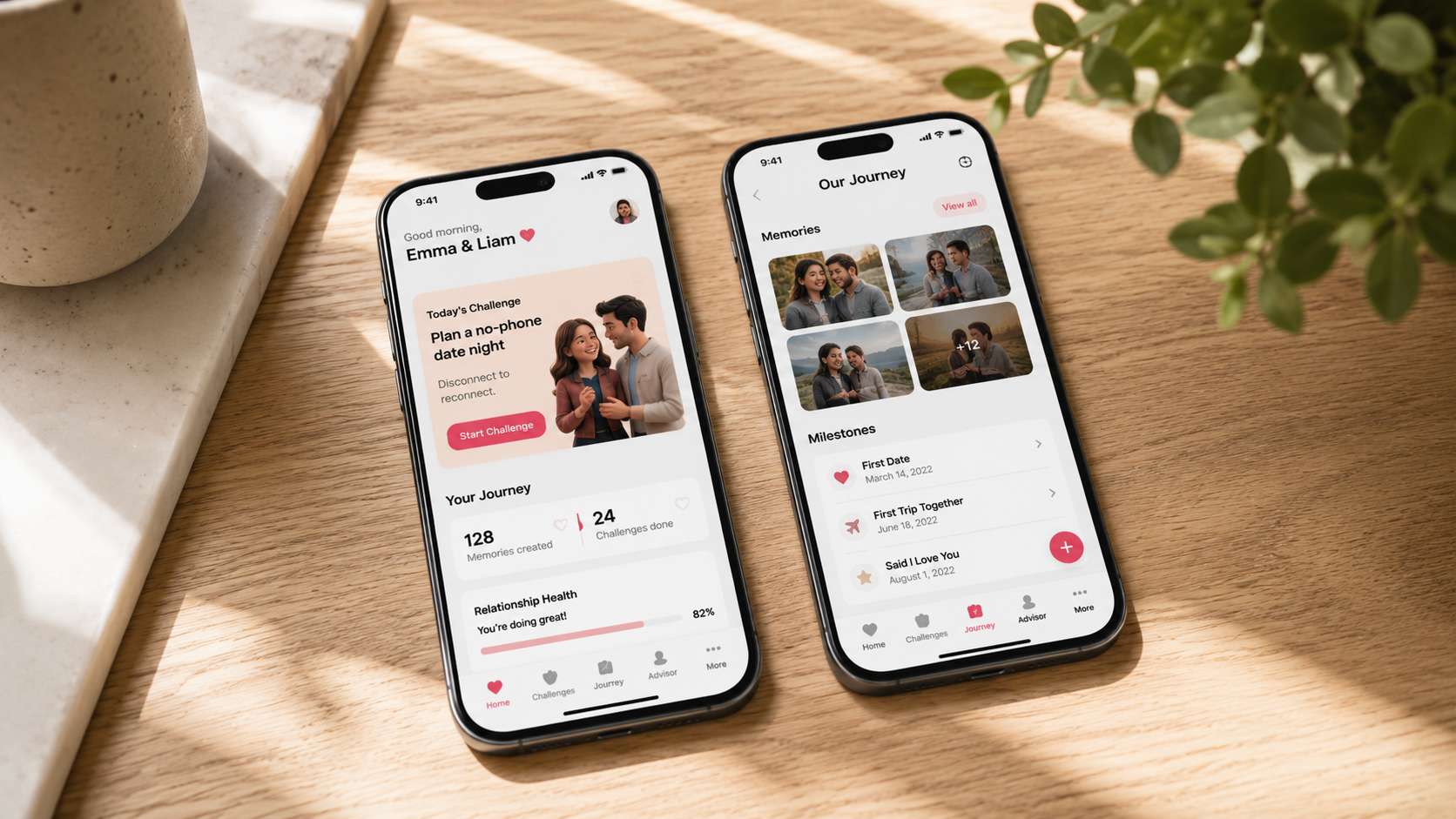
This is exactly why tools like PairPlay: Couple Relationship App are game-changers during stressful periods. Instead of staring at each other in awkward silence or feeling pressure to "perform," you can use intimate questions and games to rebuild connection without the weight of expectation. The app turns reconnection into something fun and exploratory rather than another obligation.
Practical Strategies to Reclaim Sexual Connection Under Stress
Strategy 1: The 10-Minute Reset
When stress is high and desire is low, commit to just 10 minutes of intentional physical connection. No phones. No expectations of "going all the way." Just touch, kissing, and presence. Often, this is enough to remind your body what pleasure feels like and naturally progress further. If it doesn't—that's still a win. You've rebuilt connection.
Strategy 2: Separate Stress Processing from Intimacy
Don't try to have sex while actively stressed about work or money. First, do something to genuinely process the stress: go for a run, take a shower, do a breathing exercise. Then, transition into the bedroom. Your nervous system needs permission to switch modes.
Strategy 3: Use Conversation Starters as Foreplay
Deep, intimate questions can be incredibly arousing because they require vulnerability and presence. Instead of jumping straight to physical touch, start with conversation. Try the kind of raw, late-night questions that help couples reconnect on a deeper level. This creates emotional intimacy, which naturally flows into physical intimacy. (If you're looking for structured conversation prompts, PairPlay offers thousands of intimate questions specifically designed for couples navigating stress and disconnection—they're literally built to rebuild this connection.)
Strategy 4: Reframe Sex as Stress Relief, Not Another Task
Stop thinking of sex as something you "should" do. Reframe it as medicine. It's a stress-management tool, just like exercise or meditation. When you approach it this way, it becomes less about performance and more about wellness.
Strategy 5: Explore Your Boundaries Consciously
Stress often makes us rigid about what we want or don't want sexually. Take time to revisit your sexual boundaries with your partner. What feels good right now? What doesn't? This isn't a one-time conversation—it's ongoing. Understanding each other's needs during stressful periods creates safety, which is the foundation of desire. (For a deeper dive on this, check out our guide on sexual boundaries in relationships.)
When Stress Reveals Deeper Sexual Issues

Sometimes stress doesn't just suppress desire—it exposes problems that were already there. Maybe one partner has always had lower libido. Maybe there's a mismatch in what you want sexually. Maybe there's unresolved hurt around intimacy.
Stress acts as a magnifying glass. It makes existing issues impossible to ignore.
If you're noticing that even when stress decreases, your sexual connection doesn't return, there might be something deeper to explore. This could be a sign to have more vulnerable conversations about desire, fantasy, or unmet needs. Or it could be time to work with a sex therapist who can help you untangle what's actually going on.
The key is distinguishing between "stress killed our sex life" and "stress revealed that our sex life was already struggling." Both are fixable, but they require different approaches.
Building Resilience: A Long-Term Approach
You can't eliminate stress. Life is inherently stressful. But you can build a relationship that's resilient to stress—one where intimacy is protected, prioritized, and nourished even during difficult seasons.
This means:
-
Treating sex as non-negotiable: Not in a rigid way, but in a prioritized way. Even 15 minutes of connection weekly during high-stress periods is better than nothing.
-
Staying curious about each other's bodies: When you're stressed, you get predictable. Mix things up. Try something new. Curiosity keeps desire alive.
-
Maintaining non-sexual physical affection: Holding hands, kissing, hugging—these keep your nervous system connected to your partner even when sex isn't happening.
-
Using tools and frameworks to stay connected: Whether it's couple games, intimate questions, or relationship apps, these tools remove the friction of reconnection. PairPlay turns intimacy into something playful and intentional, which is exactly what stressed couples need.
Conclusion: Stress Doesn't Have to Kill Your Sex Life
The stress and sexual connection between partners is real, measurable, and completely understandable. Your body isn't broken. Your relationship isn't failing. You're just caught in a neurobiological pattern that millions of couples experience.
The good news? You can interrupt this pattern. You can reclaim desire. You can rebuild intimacy even while stress is still present.
It starts with understanding that sex during stressful periods isn't about performance—it's about reconnection. It's about remembering that your partner is your ally, not another source of pressure. It's about using vulnerability and touch to regulate your nervous system and remind yourself what pleasure feels like.
The couples who survive—and thrive—through stressful seasons are the ones who prioritize intimacy precisely because things are hard. They understand that sex isn't a luxury; it's a lifeline.
Start small. Commit to 10 minutes this week. Use conversation, touch, and play to rebuild what stress has temporarily taken. And remember: this is temporary. Your desire will return. Your connection will deepen. But only if you tend to it intentionally.
Related Reading
-
Explore deep late-night questions for couples to rebuild emotional intimacy during stressful periods.
-
Learn about sexual boundaries in relationships to understand your needs better.
-
Check out sexual problems in relationships and how to fix them for deeper solutions.
-
Try spicy would-you-rather questions to add playfulness to your reconnection.
-
Build your bond with couple bucket list ideas for stronger bonds.
Keep the connection alive, even under stress.
Download PairPlay: Couple Relationship App for thousands of intimate questions, games, and tools designed to rebuild connection when stress threatens to pull you apart.
Related reading
Frequently Asked Questions
Is it normal to lose sexual desire when stressed?
Absolutely. Stress triggers your fight-or-flight response, which redirects blood flow away from your genitals and suppresses the hormones responsible for desire (testosterone and estrogen). This is a normal physiological response, not a sign that something is wrong with you or your relationship. Most couples experience this at some point.
How long does it take for sexual desire to return after stress decreases?
It varies, but typically a few weeks to a few months. However, the timeline can be shorter if you actively work to rebuild intimacy during the stressful period rather than waiting for stress to disappear first. The couples who reconnect fastest are those who maintain some level of physical and emotional intimacy even when desire is low.
What if my partner wants sex but I'm too stressed?
Communication is key here. Explain that you're not rejecting them—you're managing your nervous system. Offer an alternative form of connection that feels manageable (cuddling, kissing, massage). This keeps the intimacy alive without the pressure. You might also explore whether a shorter, lower-pressure sexual encounter could actually help you both feel more connected.
Can we have "good" sex while stressed?
Yes, but it might look different. Stressed sex might be shorter, require more foreplay, or feel less intense. That's okay. The goal during stressful periods isn't peak performance—it's reconnection. Some couples find that intentional, slower intimacy during stress is actually more meaningful because it requires presence and vulnerability.
Should we see a therapist if stress is affecting our sex life?
If stress is the primary culprit and you're actively working to rebuild intimacy, you might not need a therapist. But if your sexual connection doesn't improve even as stress decreases, or if there's deeper resentment or disconnection, a sex therapist or couples counselor can be incredibly valuable.
Written by PairPlay Editors
The PairPlay editorial team brings you the best research, tips, and stories to help craft deeper, stronger, and more exciting relationships.
Explore more topics
Keep building topical authority with deep dives by theme.
Keep The Spark Alive Daily
Install PairPlay and turn tonight into your best date night yet.
Get instant access to couple games, spicy prompts, and quick connection rituals built for real life. Open the app, pick a challenge, and reconnect in minutes.