How to Explore Intimacy Together Safely

The Dirty Truth About Exploring Intimacy

Let's cut the bullshit: most couples are bored as hell in the bedroom. Not because they don't love each other, but because they're terrified to ask for what they actually want. You're lying there thinking about that fantasy you've had for three years while your partner has no damn clue. Meanwhile, they're wondering if you're even attracted to them anymore.
The gap between what couples want and what they actually do in bed? It's massive. And it's not because exploration is dangerous—it's because communication is harder than vulnerability. We'll risk our bodies before we risk our egos.
But here's what changes everything: when you learn to explore intimacy together safely, you don't just have better sex. You build a foundation of trust so solid that nothing can shake it. You become the person your partner can tell their deepest desires to without judgment. You become the one they choose, over and over again.
Why Safety Isn't About Fear—It's About Freedom
Safety in the bedroom doesn't mean missionary lights-off forever. It means you've created a space where both of you can be completely honest without consequences. Where "no" is respected instantly. Where saying "I want to try something" doesn't trigger shame or rejection.
Real safety is freedom. It's the freedom to be messy, to ask for things that might sound weird, to fail and laugh about it. It's knowing that your partner has your back, always.
When couples skip the safety conversation, they end up doing one of three things: they stay in their comfort zone and resent each other quietly, they push boundaries without consent and damage trust, or they stop trying altogether and the relationship dies a slow, sexless death.
The couples who thrive? They talk about it first. Every. Single. Time.
Step 1: Have the Conversation Before the Bedroom

You need to talk about this outside the bedroom, when neither of you is naked or horny or vulnerable in that moment. This is non-negotiable.
Pick a time when you're both calm, fed, and not tired. Sit down like adults and say: "I want us to explore more together. I want to know what you actually want, and I want to tell you what I want. No judgment."
This conversation is where everything starts. Not in the heat of the moment. Not when you're already in bed. Before.
What to Actually Say
-
"I've been thinking about us, and I want to know what you've been curious about:" This opens the door without pressure. You're not demanding anything. You're asking.
-
"I have some things I'd like to try, and I'd love to hear what's on your mind too:" This makes it mutual. You're both vulnerable together.
-
"Let's make a rule: no judgment, no pressure, and either of us can say stop anytime:" This sets the boundary that makes everything else possible.
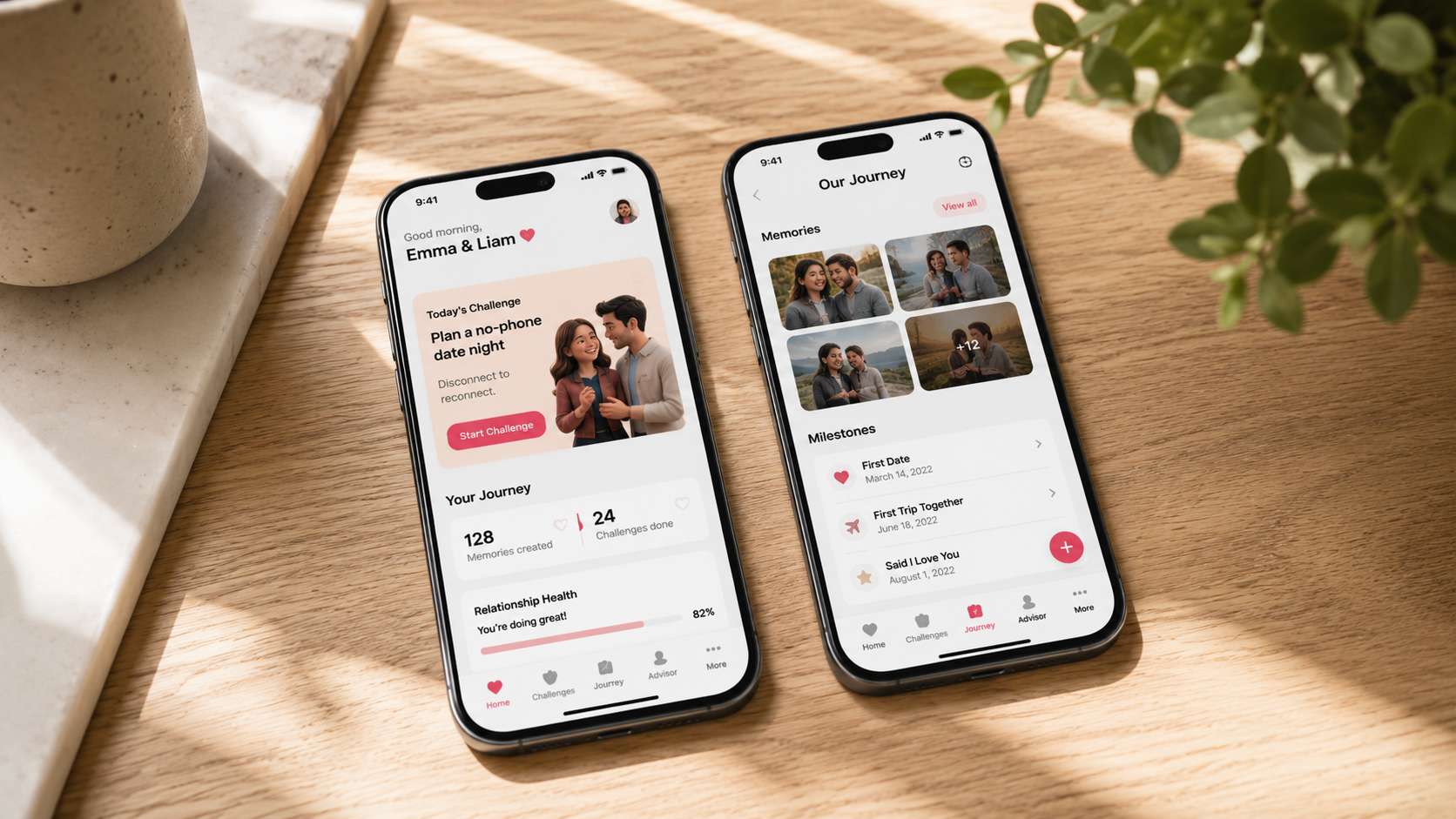
Pro tip: If you're struggling to start this conversation, try using conversation starters designed specifically for couples. Tools like PairPlay turn these awkward moments into actual games—where exploring desires feels natural instead of forced. The app literally guides you through these questions so you don't have to sit there sweating.
Step 2: Establish Your Boundaries and Safe Words
This isn't kinky roleplay talk (though it can be). Every couple needs boundaries, even if you're just trying vanilla exploration for the first time.
Boundaries are the skeleton that holds everything together. They're not sexy, but they make the sexy stuff actually possible.
The Three-Word Safe Word System
-
Green: "I'm into this, keep going." Everything's good. Full speed ahead.
-
Yellow: "Slow down, check in with me." This isn't a stop, it's a pause. Maybe something doesn't feel right, or you need reassurance, or you need to adjust position. Yellow means "I need you to pause and ask me what's wrong."
-
Red: "Stop immediately." No questions. No "but we just started." Stop. Full stop. This is sacred.
The beauty of this system is that it removes the guessing game. Your partner doesn't have to read your face or wonder if you're okay. You just say the word, and they respond. That's it.
Step 3: Share Your Desires (Without the Shame Spiral)
This is where most couples fail. You've had the conversation, you've set the boundaries, and now you're supposed to actually tell each other what you want. And suddenly your brain is screaming: "What if they think I'm weird? What if they judge me? What if they don't want it?"
That voice is the enemy of good sex and deeper connection.
Here's the reframe: Your desires aren't weird. They're human. Every fantasy, every curiosity, every "what if"—it's normal. And your partner having different desires than you doesn't mean anything is wrong. It just means you're two different people.
How to Share Without the Shame
-
Start small: You don't have to dump your entire fantasy list on them. Start with something that feels manageable. "I've been thinking about trying X" is enough to start.
-
Use "I" statements: "I find it really hot when..." instead of "You should..." One is about your desire. The other feels like criticism.
-
Make it collaborative: "What do you think about trying...?" This isn't a demand. It's an invitation. There's a massive difference.
-
Listen without defensiveness: When your partner shares their desires, your job is to listen. Not to judge. Not to immediately say yes or no. Just listen and say: "Thank you for trusting me with that."
If you're struggling to articulate what you want, that's exactly what PairPlay is built for. The app has thousands of questions that help couples discover desires they didn't even know they had. Instead of sitting there in silence trying to find the words, you're playing a game together. Suddenly it's fun, not terrifying.
Step 4: Start Slow and Check In Constantly

The first time you explore something new together, go slow. Stupidly slow. Slower than you think you need to.
Your body needs time to adjust to new sensations. Your mind needs time to process. And your emotional connection needs time to deepen with each new level of vulnerability.
Check in constantly. Not in a clinical way. Just: "How are you feeling?" "Does this feel good?" "Want to keep going?" These aren't mood killers. They're the foundation of real intimacy.
And here's the thing nobody talks about: sometimes the hottest moment is when you stop and just look at each other. When you're both breathing hard and you're completely present with another human being who's chosen to be vulnerable with you. That's the good stuff.
Step 5: Create a Feedback Loop (The Unsexy But Essential Part)
After you explore something new, talk about it. Not immediately. Not in a debriefing way. But the next day, or later that week: "I've been thinking about what we did. I really liked when you..." or "That wasn't quite what I expected, but I loved that you tried."
This feedback loop is where trust actually builds. You're telling each other what worked, what didn't, and what you want to do differently next time. You're not criticizing. You're collaborating.
And here's the secret: couples who do this consistently don't just have better sex. They have better communication about everything. Money, kids, career stress, family drama—all of it gets easier when you've practiced being honest about the hard stuff in the bedroom.
Step 6: Know When to Say No (And Mean It)

This is non-negotiable: you can always say no. To anything. And your partner's job is to respect that without making you feel guilty.
"No" doesn't need explanation. "No" doesn't need justification. "No" is a complete sentence.
If your partner tries to convince you, pressure you, or make you feel bad for saying no, that's a sign that something is broken in your foundation. That's not exploration. That's coercion. And that's not what we're talking about here.
Real exploration only happens when both people know they can stop at any moment without consequence.
The Role of Emotional Intimacy in Physical Exploration
Here's what most people don't realize: the hotter the sex gets, the more emotional intimacy you need. Not less. More.
When you're trying something new, you're literally putting your body and ego on the line. Your partner is seeing parts of you that you might not have shown anyone else. That requires trust that goes way beyond "we've been together for five years."
Before you explore anything physically, make sure you've explored emotionally. That means you've had the real conversations about vulnerability. You know each other's fears, your wounds, your insecurities. You've asked the emotional intimacy questions that actually matter.
The couples who have the best sex aren't the ones with the most experience. They're the ones with the most trust. And trust is built through emotional vulnerability first, physical vulnerability second.
The Tech That Actually Helps (Without Being Creepy)
Let's be real: talking about sex is still awkward for most people. That's why tools matter.
PairPlay isn't here to replace your conversations. It's here to make them easier. The app gamifies these questions so that exploring desires feels natural instead of forced. You're playing together, laughing together, and suddenly you're sharing things you've never said out loud before.
Instead of sitting across from each other in silence trying to figure out what to say, you're both engaged in something that feels fun. And that's when the real conversations happen.
Download PairPlay and start with the spicy questions section. You'll be surprised how quickly the conversation flows once you have a framework for it.
Conclusion: Exploration Is the Antidote to Boredom
The couples who stay connected, who keep wanting each other, who don't drift apart—they're the ones who explore. Not recklessly. Thoughtfully. With intention and respect and constant communication.
Exploring intimacy together safely isn't complicated. It's just: talk first, set boundaries, be honest, start slow, check in, and keep talking. That's it.
When you do this, something shifts. Your partner becomes the person who knows you most. The bedroom becomes a place of real connection, not just physical release. And sex stops being something you do and starts being something you share.
The question isn't whether you should explore. It's whether you're brave enough to be honest with the person you love. Because that's what exploration really is: honesty with your clothes off.
So start the conversation. Set the boundaries. And remember: the hottest couples aren't the ones doing the most extreme things. They're the ones who trust each other enough to try.
Ready to have the conversation?
Stop overthinking it. Download PairPlay and let the app guide you through spicy questions, intimate prompts, and conversation starters that make exploring desires feel natural—not forced.
Related reading
Frequently Asked Questions
What if my partner isn't interested in exploring?
That's valid, and it doesn't mean your relationship is broken. But you do need to understand why. Is it fear? Shame? Different libido? Different desires? Have a real conversation about it outside the bedroom. Sometimes people need time, reassurance, or a different approach before they're ready. If you're consistently wanting different things and neither of you is willing to explore, that's a compatibility issue worth addressing with a therapist or couples counselor.
How do I bring this up without making it weird?
Pick a calm moment, not during or right before sex. Say something like: "I've been thinking about us, and I want to make sure we're both getting what we need. Can we talk about that?" If you're nervous, use a tool like PairPlay that has built-in conversation starters. Sometimes it's easier to start with a game than a direct conversation.
Is it normal to feel nervous the first time we try something new?
Absolutely. You're being vulnerable. Your brain is processing new sensations. Your nervous system might be activated. All of that is normal. The key is checking in with your partner constantly and remembering that you can stop at any time. Nervousness doesn't mean something is wrong—it means you're trying something new, which is brave.
What if we have different comfort levels with exploration?
That's actually super common and totally manageable. The key is respecting each other's boundaries while still finding middle ground. Maybe one of you wants to explore more than the other. That doesn't mean you can't find things you both enjoy. Start with what you both feel comfortable with, and expand from there at a pace that works for both of you.
How often should we be exploring new things?
There's no "should" here. Some couples explore something new monthly, others do it once a year. What matters is that you're both on the same page about the pace. And that you're constantly communicating about what's working and what isn't. Quality over quantity, always.
Written by PairPlay Editors
The PairPlay editorial team brings you the best research, tips, and stories to help craft deeper, stronger, and more exciting relationships.
Explore more topics
Keep building topical authority with deep dives by theme.
Keep The Spark Alive Daily
Install PairPlay and turn tonight into your best date night yet.
Get instant access to couple games, spicy prompts, and quick connection rituals built for real life. Open the app, pick a challenge, and reconnect in minutes.