How Body Image Blocks Sexual Connection

Body image and intimacy is one of the most brutal couples problems because it is quiet. It does not kick the door down like cheating or screaming fights. It slides under the sheets with you, whispers poison in your ear, and turns your partner's hands into something you flinch from.
If you have ever avoided lights, sucked in your stomach like it is your job, rushed foreplay, kept a shirt on, refused oral, or gone numb the moment you felt eyes on you... you already know. This is not vanity. This is survival mode. And survival mode kills erotic connection.
This guide is about the real mechanics: how body shame blocks desire, what it does to arousal, and how to rebuild safety so sex feels like pleasure again, not an evaluation. And yes, you can do this without pretending you love every inch of yourself first. You just need a path and a partner who is willing to stay present.
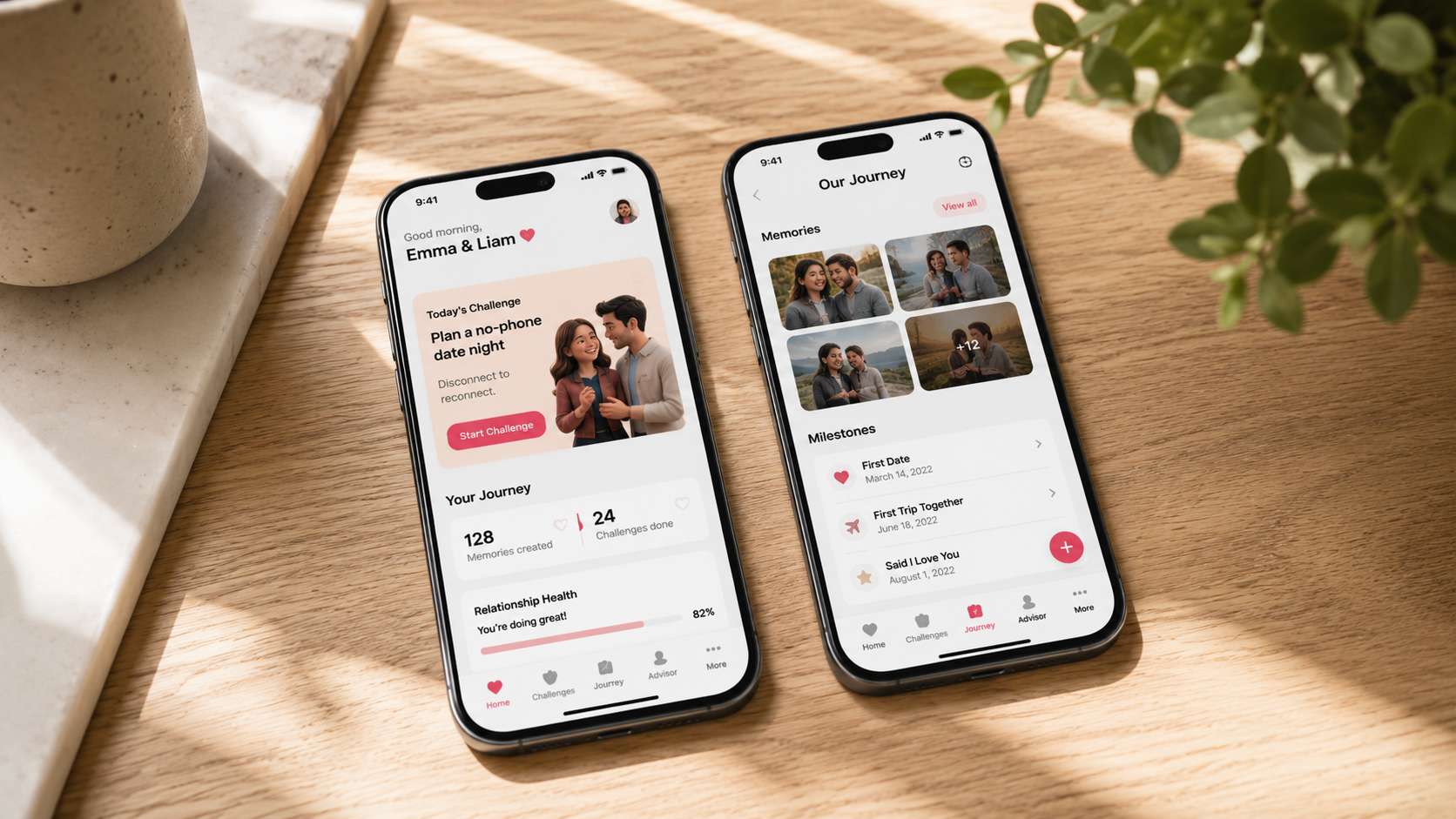
Want a dirty-but-safe way to start the conversation tonight? PairPlay: Couple Relationship App turns the hard talks into guided questions, spicy games, and intimate check-ins that do not feel like therapy homework.
When your body becomes the enemy, your partner becomes the witness

Body image issues inside a relationship rarely show up as, "I hate my thighs." They show up as distance.
- Avoidance: You dodge showers together, you rush changing clothes, you keep the lights off, you say you are tired when you are actually scared.
- Control: You micromanage angles, positions, mirrors, and movement so nothing jiggles, folds, or looks "bad".
- Freeze response: Your partner touches you and your mind leaves your body. You are there, but you are not.
- Deflection: You make jokes, you criticize yourself first, you push their compliments away like they are lying.
- Perfection-performance sex: You try to be "hot" instead of present. It can look porn-ready and still feel dead inside.
What hurts most is the misunderstanding. Your partner thinks you are rejecting them. You think you are protecting yourself. Nobody is wrong, but you both end up lonely.
If conflict stacks on top of this, it gets even harder to feel safe. If you need a reset on how to fight without leaving scars, read How to Argue Without Hurting Each Other: The Raw Guide to Fighting Like Adults and come back with a cleaner emotional slate.
The sexiest organ is your brain, and body shame hijacks it

Arousal is not just friction and anatomy. It is attention. When you are turned on, your brain is allowing pleasure to land. Body shame steals that attention and replaces it with monitoring: How do I look? Did my stomach fold? Are they disappointed? Is my skin gross? Do I smell?
This is why you can be wildly attracted to your partner and still struggle to orgasm, lubricate, or stay hard. Your nervous system is stuck in threat detection.
Spectatoring: the silent killer of pleasure
Sex researchers have a name for watching yourself during sex like you are in an audition: spectatoring. It is the mental camera angle that turns you into an object instead of a participant.
When spectatoring takes over, you do not feel your partner's mouth. You feel the idea of your body being judged.
For an evidence-based look at how sexual functioning and psychological factors connect, check NHS sexual health for grounded, non-sensational information on arousal, anxiety, and common sexual difficulties.
Desire does not thrive under surveillance
Many couples get trapped in a loop:
- You feel insecure: you avoid sex or keep it minimal.
- Your partner feels rejected: they stop initiating or they initiate clumsily.
- You feel pressured: your body braces, you dissociate, you perform.
- Sex feels worse: reinforcing the insecurity.
Breaking the loop is not about forcing confidence. It is about building safety and permission to be real.
How body image blocks sexual connection in real life (the patterns you can actually spot)
Here are the most common ways body image and intimacy crash into each other in long-term relationships, especially when life stress, kids, aging, or medical stuff enters the chat.
- Initiation becomes a minefield: you only want sex when you have had a "good body day" or after you have worked out, shaved, or starved yourself.
- Foreplay gets skipped: because slowing down means being seen. You go straight to penetration or straight to finishing, because lingering feels dangerous.
- Positions shrink: you avoid angles where you feel exposed. You stop exploring, and your erotic map gets smaller.
- Receiving feels impossible: you can give pleasure easily, but receiving makes you feel too visible, too vulnerable, too judged.
- Compliments backfire: your partner says you are beautiful, and you hear, "I am lying to keep you calm."
- Photos and mirrors become triggers: a candid picture can kill libido for days.
If you want a gentler way to rebuild closeness without jumping straight into full-on sex, use a ritual like Eye Gazing & Mindful Touch: The Sensate Focus Ritual That Makes Couples Feel Ferally Close. It is intimate, slow, and designed to keep you in your body instead of in your head.
Talk about it without turning it into a pity party or a fight

You do not need a perfect script. You need honesty without self-violence, and you need requests your partner can actually respond to.
Try this structure:
- Name the real issue: "This is not about you being unattractive to me. This is about me feeling exposed in my body."
- Say what it costs you: "When I am in my head, I cannot feel pleasure. I go numb."
- Ask for one specific support: "Can we keep the lights low and do slow touch for ten minutes without trying to finish?"
- Reassure connection: "I want you. I want us. I just need safety to land."
If you are not sure how to start, steal prompts from PairPlay: Couple Relationship App. It gives you guided, erotic-but-anchored questions like, "What kind of touch helps you feel safe in your body?" and turns them into a playful flow instead of a tense interrogation.
<blockquote>*Hot truth:* You can be insecure and still be wildly desirable. The goal is not to erase insecurity. The goal is to stop letting insecurity run the bedroom. </blockquote> ## Rebuild erotic safety: the practices that make desire come backConfidence is not the prerequisite. Safety is. Here is how you build it in a way that feels sexy, not clinical.
Do a no-performance night (yes, it is still horny)
A no-performance night is simple: no goal to orgasm, no goal to penetrate, no goal to be impressive. The goal is sensation and connection.
- Set the frame: "Tonight is touch only. We are not trying to get anywhere."
- Choose boundaries: underwear on/off, lights, music, mirror rules.
- Use a timer: ten minutes each of giving and receiving touch. Then switch.
- Talk in the moment: "Softer." "Slower." "Stay right there."
This is why sensate focus works: it retrains your body to associate intimacy with safety. If you want a deep emotional version of this in the bedroom, explore The Best Intimate Positions for Emotional Bonding: Raw, Vulnerable, and Deeply Connected and pick one position that feels exposing in a good way, not a triggering way.
Use "consent language" with your long-term partner
Consent is not just for new hookups. It is for couples who want sex to feel clean, wanted, and chosen.
- Ask: "Do you want my hands on you right now?"
- Offer: "I want to kiss you slowly. Want that?"
- Check: "More pressure or less?"
- Celebrate boundaries: "Thank you for telling me. I love that you know what you need."
This language helps body-shame partners stop bracing. It also makes the confident partner stop guessing.
For a broader view of how body image distress can show up and what support can look like, see National Eating Disorders Association body image resources (useful even if you do not have an eating disorder diagnosis).
Stop outsourcing your self-worth to your partner's desire

This part is dark and tender: when you hate your body, you may use sex like a lie detector test.
You crave reassurance, but you cannot absorb it. So you chase more proof: more compliments, more initiation, more intensity. And if your partner is stressed, tired, depressed, or just human, their desire fluctuates and your brain says, "See? You are disgusting."
Here is the boundary that sets you free: your partner's libido is not a referendum on your worth.
If you need a clean, clinical resource on how body image and mental health interplay, read Body image and psychological well-being (NCBI) for research context that can help you stop personalizing everything.
Also: if parenthood, blended families, or nonstop kid-energy is involved, your body image can get worse because your body stops feeling like it belongs to you. If that is your situation, do not miss Blending Families: The Raw Truth About Keeping Your Couple Connection Alive When Kids Enter the Picture. Desire needs protected space.
Make intimacy playful again (because shame hates laughter)
Shame thrives in silence and seriousness. Play cuts the power.
- Flirt in daylight: send one explicit sentence before dinner. Not a photo. A sentence.
- Try "clothed sex" on purpose: grind, kiss, touch through fabric, let it be messy and hot without exposure.
- Make a "yes/no/maybe" list: not as pressure, as curiosity.
- Use games: structure gives safety, and safety gives arousal.
Want more questions like this? Download PairPlay: Couple Relationship App and let it lead you through playful dares, intimate prompts, and honest check-ins that feel like foreplay, not a lecture.
If you need a lighter entry point tonight, steal a few from 30 Playful Questions to Make Your Partner Laugh: Sexy, Weird & Unapologetically Fun. Laughter is not a detour from intimacy. It is the on-ramp.
Conclusion: you do not need a different body, you need a different dynamic
Body image and intimacy is not fixed by a smaller waist or a better angle. It is fixed by safety, consent, presence, and a bedroom culture where your body is allowed to be a body: soft, loud, imperfect, alive.
- Notice the pattern: avoidance, control, spectatoring, numbness.
- Name it out loud: not as blame, as truth.
- Rebuild safety: no-performance nights, sensate focus, consent language.
- Bring back play: laughter, flirting, guided games.
If you want an easy companion tool that keeps this momentum going, download PairPlay: Couple Relationship App. It helps you turn awkward talks into intimate action with prompts designed for real couples who want sex to feel connected again.
Keep the conversation going.
Download PairPlay for thousands more questions and games.
Related reading
- How to Argue Without Hurting Each Other: The Raw Guide to Fighting Like Adults
- Eye Gazing & Mindful Touch: The Sensate Focus Ritual That Makes Couples Feel Ferally Close
- The Best Intimate Positions for Emotional Bonding: Raw, Vulnerable, and Deeply Connected
- Blending Families: The Raw Truth About Keeping Your Couple Connection Alive When Kids Enter the Picture
- 30 Playful Questions to Make Your Partner Laugh: Sexy, Weird & Unapologetically Fun
Frequently Asked Questions
Is it normal to lose desire because of body image?
Yes. Body shame increases self-monitoring and anxiety, which can block arousal and make it hard to stay present for pleasure.
My partner compliments me but I cannot believe them. How do I respond?
Explain that compliments can bounce off when you are triggered and ask for supportive actions that create safety, like slower touch, low light, and gentle check-ins during intimacy.
What is a no-performance night and why does it help?
It is an intimacy night with no goal to orgasm or perform. You focus on sensation and consent-based touch, which retrains your body to associate closeness with safety.
Does avoiding mirrors or keeping the lights off make body image worse?
It depends. If it helps you relax and feel pleasure, it can be supportive. If it becomes rigid avoidance that prevents any feeling of being seen, it can reinforce fear. Aim for flexible options.
When should we consider therapy?
If body image distress is severe, linked to trauma or disordered eating, or intimacy triggers panic, dissociation, or frequent conflict, seek a licensed therapist or certified sex therapist for shame-free support.
Written by PairPlay Editors
The PairPlay editorial team brings you the best research, tips, and stories to help craft deeper, stronger, and more exciting relationships.
Explore more topics
Keep building topical authority with deep dives by theme.
Keep The Spark Alive Daily
Install PairPlay and turn tonight into your best date night yet.
Get instant access to couple games, spicy prompts, and quick connection rituals built for real life. Open the app, pick a challenge, and reconnect in minutes.